
AI Automation for Courier and Last-Mile Delivery Companies in 2026
AI Automation for Courier and Last-Mile Delivery Companies in 2026#
Last-mile delivery is the most expensive part of the shipping chain. It accounts for over 50% of total delivery costs, and that number keeps climbing as customers demand faster windows, real-time tracking, and zero tolerance for missed deliveries.
If you run a courier or last-mile delivery company, you already know the pain. Drivers taking inefficient routes. Customers calling to ask where their package is. Failed deliveries that cost you a second attempt. Dispatchers juggling spreadsheets and phone calls to keep everything moving.
AI automation changes the math on all of this. Not with some futuristic robot fleet, but with practical tools that optimize the operations you already have. Route planning that actually accounts for traffic, delivery windows, and driver capacity. Automated customer notifications that kill your inbound call volume. Intelligent dispatch that assigns the right driver to the right job without a human bottleneck.
Here is how courier and last-mile delivery companies are using AI automation in 2026 to cut costs, reduce failed deliveries, and scale without proportionally scaling headcount.

Why Last-Mile Delivery Is Ripe for AI Automation#
Last-mile delivery has a unique combination of characteristics that make it perfect for AI: high volume, high variability, and high cost of errors. Every day looks different. Traffic patterns shift, package volumes spike unpredictably, and a single failed delivery can cascade into customer churn and wasted driver hours.
Traditional logistics software helps, but it was designed for predictable, repeatable workflows. AI handles the chaos. It learns from historical delivery data, adapts to real-time conditions, and makes decisions faster than any dispatcher can.
The companies already adopting AI automation in their delivery operations are seeing 15-30% reductions in fuel costs, 20-40% fewer failed deliveries, and significant drops in customer service inquiries. These are not hypothetical numbers from a vendor pitch deck. They are the results we see when businesses actually implement these systems.
Route Optimization That Goes Beyond Basic GPS#
Most courier companies already use some form of route planning. Maybe it is Google Maps, maybe it is a dedicated routing tool. But basic route optimization only solves one variable: distance. AI-powered route optimization solves for everything simultaneously.
- Real-time traffic conditions and historical traffic patterns by time of day
- Delivery time windows and customer priority levels
- Vehicle capacity and package size constraints
- Driver shift schedules and break requirements
- Weather conditions that affect driving speed
- Parking availability at delivery locations
- Failed delivery probability based on historical data for specific addresses
That last point is critical. AI can predict which deliveries are likely to fail before the driver even leaves the depot. An address with three failed attempts in the past month? The system flags it and suggests a different time window or triggers a pre-delivery confirmation to the customer. This alone can save thousands per month in reattempt costs.
One courier company we worked with was running 35 routes daily with 12 drivers. After implementing AI route optimization, they handled the same volume with 9 drivers and actually improved their on-time delivery rate from 87% to 96%. The drivers were not working harder. The routes were just smarter.

Automated Dispatch and Driver Assignment#
In most courier operations, dispatch is a human bottleneck. One or two people are making real-time decisions about which driver gets which packages, handling callouts, rebalancing loads when volumes shift, and fielding driver questions all day. It works until it does not, and the breaking point usually hits right when you are trying to grow.
AI-powered dispatch automates the assignment process. When new orders come in, the system evaluates every available driver based on current location, remaining capacity, route efficiency, and delivery deadlines. It makes the assignment in seconds, not minutes. And it keeps reoptimizing throughout the day as conditions change.
This is not about replacing your dispatchers. It is about freeing them from the mechanical work so they can handle exceptions, manage driver issues, and focus on the decisions that actually need a human brain. The AI handles the 90% of assignments that are straightforward. Your dispatchers handle the 10% that are not.
Reducing Failed Deliveries with Predictive AI#
Failed deliveries are profit killers. Industry data suggests the average cost of a failed delivery attempt is $12-$17 when you factor in driver time, fuel, customer service handling, and the reattempt itself. For a company doing 500 deliveries a day with a 10% failure rate, that is $600-$850 in waste every single day.
AI tackles this from multiple angles:
- Predictive failure scoring. The system analyzes historical delivery data for each address, time slot, and customer to predict failure probability. High-risk deliveries get flagged for proactive intervention.
- Automated pre-delivery notifications. Customers receive an SMS or email with their delivery window and a one-tap option to reschedule if they will not be available. This catches problems before the driver is en route.
- Dynamic rescheduling. When a customer reschedules, the AI automatically adjusts routes in real time. No dispatcher intervention needed.
- Proof of delivery automation. Photo capture, GPS verification, and digital signatures are logged automatically, reducing disputes and claims.
- Smart safe-place suggestions. Based on delivery history and customer preferences, the system can suggest alternative drop locations to avoid failed attempts.
Cutting your failed delivery rate from 10% to 3-4% does not just save money on reattempts. It improves customer satisfaction, reduces inbound support calls, and frees up driver capacity for revenue-generating deliveries instead of second attempts.

Customer Communication on Autopilot#
"Where is my package?" If your customer service team had a dollar for every time they heard that question, you could probably fund your entire AI automation project. Real-time tracking and proactive notifications eliminate the majority of these inquiries.
AI-powered customer communication goes beyond basic tracking links. Here is what a modern automated communication flow looks like:
- Order confirmation with estimated delivery window
- Day-of reminder with a narrowed time window based on real-time route progress
- "Driver is 15 minutes away" notification triggered by GPS proximity
- Delivery confirmation with photo proof
- Automated follow-up for feedback or issue reporting
- AI chatbot handling common inquiries (tracking, reschedule, claims) without human intervention
Companies implementing this kind of automated communication typically see a 40-60% reduction in inbound customer service volume. That translates directly to either lower staffing costs or the ability to handle more deliveries without adding support headcount.
Demand Forecasting and Capacity Planning#
One of the hardest parts of running a courier operation is predicting volume. Staff too many drivers on a slow day and you are burning cash. Staff too few on a surge day and you are missing deliveries, paying overtime, and frustrating customers.
AI demand forecasting analyzes your historical delivery data alongside external signals like weather, local events, e-commerce trends, holidays, and even day-of-week patterns to predict tomorrow's (or next week's) volume with surprising accuracy. We have seen forecasting models achieve 85-92% accuracy on daily volume predictions after just 3-4 months of training data.
With accurate forecasts, you can:
- Schedule the right number of drivers for each day
- Pre-plan routes the night before based on expected volume
- Negotiate better rates with contract drivers by giving them advance notice
- Identify capacity limits before they become customer-facing problems
- Plan vehicle maintenance during predicted low-volume periods

Invoice and Settlement Automation#
If you work with contract drivers, business clients, or multiple delivery channels, invoicing and settlement can become a nightmare. Different rates for different clients, surcharges for time-sensitive deliveries, fuel adjustments, failed delivery charges, weekend premiums. The complexity adds up fast.
AI automation handles this by pulling delivery data directly from your operations system, applying the correct rate structures automatically, generating invoices, and even flagging discrepancies before they become disputes. What used to take your office manager a full day each week can run in the background continuously.
For driver settlements specifically, automated systems calculate pay based on actual deliveries completed, stops made, hours worked, and any bonuses or deductions. Drivers can see their earnings in real time through a mobile app, which reduces payroll questions and builds trust. If you want to learn more about automating financial workflows, check out our guide on measuring AI automation ROI.
Real-Time Fleet Visibility and Exception Management#
Knowing where every vehicle is and what every driver is doing sounds simple. In practice, most courier companies are operating partially blind. They know the plan for the day, but they do not have real-time visibility into how that plan is actually playing out.
AI-powered fleet management gives you a live operational picture and, more importantly, automatically identifies exceptions that need attention. A driver running 30 minutes behind schedule? The system recalculates their remaining route, notifies affected customers, and alerts dispatch only if manual intervention is needed. A vehicle showing unusual fuel consumption? Flagged for maintenance review. A delivery zone experiencing higher-than-normal failure rates this week? Surfaced in a daily summary so you can investigate.
The key difference between traditional fleet tracking and AI-powered visibility is that traditional systems show you data. AI systems show you what matters and what to do about it.

Where to Start: The Highest-Impact Automations First#
You do not need to automate everything at once. The smartest courier companies start with the automation that delivers the fastest ROI, prove it works, then expand. Based on what we have seen across delivery operations, here is the priority order:
- Route optimization. Fastest payback. Fuel savings and driver efficiency improvements show up within weeks.
- Customer notifications. Low complexity, high impact on customer satisfaction and support volume.
- Failed delivery prediction and prevention. Moderate complexity, but the cost savings from reduced reattempts compound quickly.
- Automated dispatch. Higher complexity, but critical for scaling past 15-20 drivers.
- Demand forecasting. Requires historical data, but once trained, it pays for itself through better capacity utilization.
- Invoicing and settlements. Back-office efficiency that frees up administrative time.
For a deeper look at how to prioritize which processes to automate first, read our guide on 5 business processes you should automate with AI.
What This Looks Like in Practice#
Here is a realistic before-and-after for a mid-size courier company doing around 400 deliveries per day with 15 drivers:
Before AI automation: Two full-time dispatchers manually assigning routes each morning. Drivers using basic GPS navigation. 11% failed delivery rate. Customer service team handling 80+ "where is my package" calls daily. Invoicing takes 8 hours per week. No demand forecasting beyond gut feel.
After AI automation: Routes auto-generated and optimized by 5 AM each morning. Dispatchers focus on exceptions only. Failed delivery rate drops to 4%. Customer calls drop to under 20 per day. Invoicing runs automatically with human review only for flagged exceptions. Demand forecasting enables proactive scheduling 3 days ahead.
The result? Same delivery volume handled more efficiently, with better customer satisfaction scores, lower operational costs, and the capacity to take on 30% more volume without adding drivers or dispatchers. That is the power of building AI automation into logistics operations.
Ready to Automate Your Delivery Operations?#
At Infinity Sky AI, we build custom AI automation tools for courier and last-mile delivery companies. Not generic software you have to bend your operations around. Custom tools built for how your business actually works. We start by understanding your specific workflows, identify the highest-impact automation opportunities, and build a system that integrates with your existing operations.
If you are running a delivery operation and want to see what AI automation could look like for your business, book a free strategy call. We will walk through your current processes, identify the quick wins, and give you an honest assessment of where AI can (and cannot) help.
How much does AI automation cost for a courier company?
Do I need to replace my current logistics software to use AI automation?
How long does it take to implement AI automation in a delivery operation?
Will AI automation work for a small courier company with fewer than 10 drivers?
What data do I need to get started with AI automation?
Related Posts
AI Automation for Freight Brokers and Trucking Companies in 2026: What Actually Works
Discover how freight brokers and trucking companies use AI automation to cut load matching time, streamline dispatch, and reduce back-office costs in 2026.
AI Automation for Logistics and Supply Chain: What's Actually Working in 2026
Discover how logistics companies use AI automation to cut costs, optimize routes, and manage inventory. Practical examples and real ROI for supply chain operations.
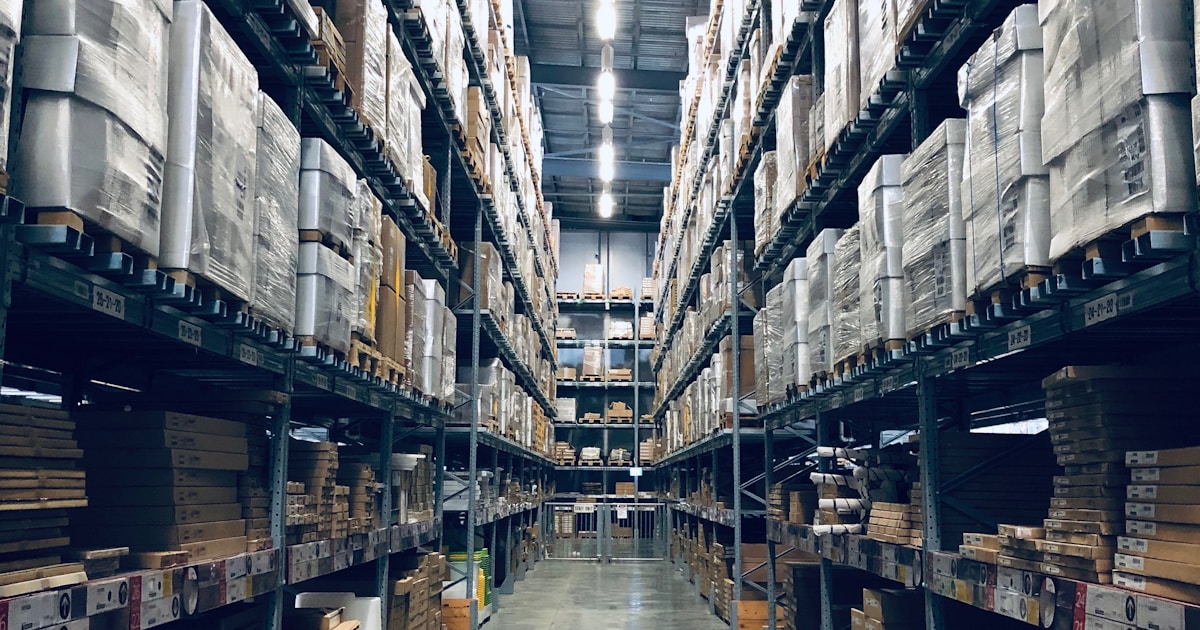
AI Automation for Warehouses and Order Fulfillment: What Actually Works in 2026
Discover how AI automation transforms warehouse operations and order fulfillment. Practical guide covering picking, packing, inventory, and workforce scheduling.

What to Expect in Your First 90 Days After Implementing AI Automation
Your AI automation just went live. Here's a realistic 90-day timeline of what happens next, from early wins to optimization, so you know exactly what to expect.